
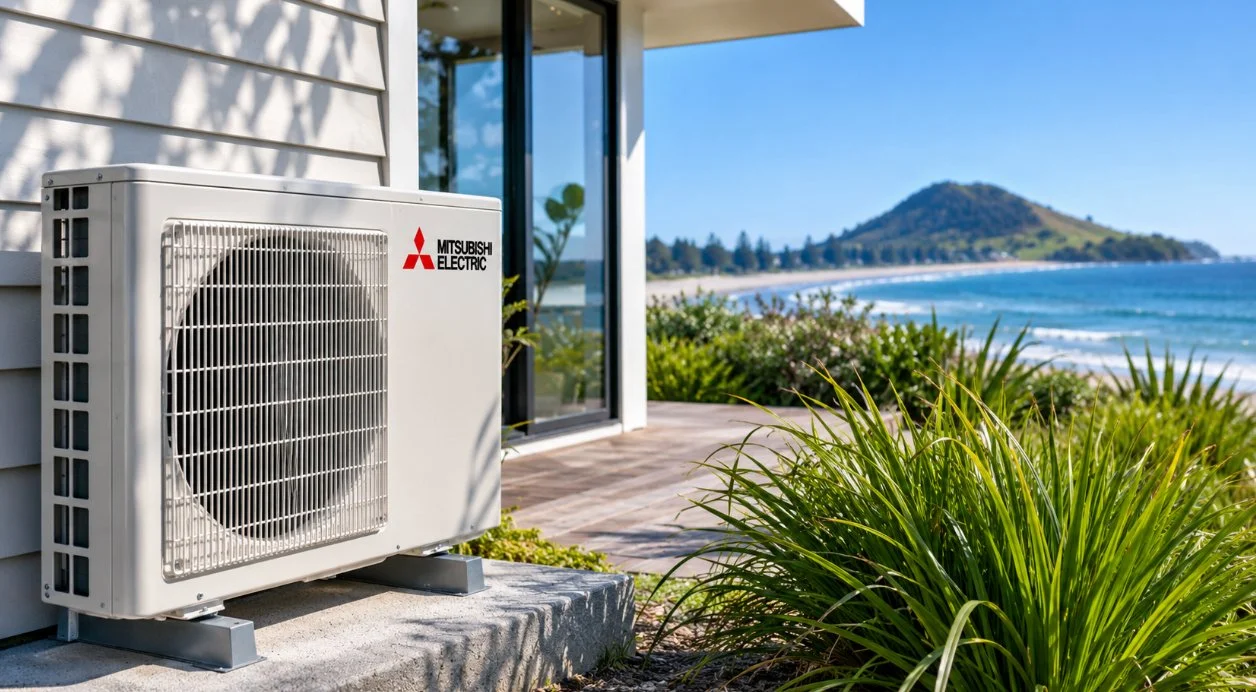
Heat Pumps in Coastal Homes: What Tauranga, Mount Maunganui and Papamoa Homeowners Need to Know
Living near the coast is one of the great advantages of calling the Bay of Plenty home. From Mount Maunganui and Papamoa to the waterfront suburbs of Tauranga, coastal living offers beautiful surroundings and a relaxed lifestyle.
However, salt-laden air, moisture and exposure to coastal winds can create additional challenges for outdoor equipment, including heat pumps.
If you're considering installing a heat pump in a coastal property, choosing the right system is only part of the equation. Where the outdoor unit is installed, how it is protected and how regularly it is maintained can all influence its long-term performance.
At Bay of Plenty Heat Pumps, we specialise in Mitsubishi Electric heat pump installation, servicing and repairs throughout Tauranga and the wider Bay of Plenty.
In this guide, we explain what coastal homeowners should consider when choosing and maintaining a heat pump.
Does Salt Air Damage Heat Pumps?
Yes. Salt in the air can accelerate corrosion of metal components over time, particularly when combined with moisture and ongoing exposure to coastal weather.
A heat pump's outdoor unit contains several components that can be affected by corrosive conditions, including its metal casing, heat exchanger, fixings and other exposed parts.
Corrosion may initially appear as surface discolouration or deterioration of protective finishes. If left unchecked, it can eventually affect components that are important for the heat pump's performance and reliability.
Mitsubishi Electric New Zealand identifies coastal salt air as an environmental factor that can increase corrosion risk for heating and air conditioning equipment.
Importantly, living near the beach doesn't automatically mean your heat pump will develop corrosion problems. The level of exposure, installation position, equipment protection and maintenance all make a difference.
For homeowners in Mount Maunganui, Papamoa and other coastal parts of the Bay of Plenty, it's worth discussing these factors with a qualified heat pump installer before installation.
Why Heat Pump Installation Position Matters in Coastal Areas
The location of your outdoor heat pump unit can make a significant difference to how exposed it is to salt spray, wind and moisture.
Two homes in the same coastal suburb can experience very different conditions depending on their orientation, surrounding buildings, landscaping and distance from the shoreline.
For example, a beachfront property directly exposed to prevailing sea winds may require different installation considerations from a home several streets inland with a sheltered outdoor area.
When assessing outdoor unit placement, several factors are important.
Protection From Direct Sea Spray
Where practical, an outdoor unit should be positioned to reduce direct exposure to salt-laden sea winds and sea spray.
A more sheltered location may help limit the accumulation of corrosive deposits on exposed components.
However, protection should never come at the expense of the airflow required for the system to operate correctly.
Adequate Airflow Around the Unit
Heat pumps need sufficient space around their outdoor units to exchange heat efficiently.
Installing a unit in an enclosed or poorly ventilated space can restrict airflow and compromise performance.
Any screening, landscaping or protective structure needs to comply with the manufacturer's installation requirements.
Effective Drainage
Outdoor units must be installed so water can drain appropriately.
Standing water and persistent moisture around metal components can contribute to corrosion and other maintenance problems.
Correct mounting, drainage and accessibility should all be considered during installation.
Access for Servicing
An outdoor unit should also be positioned where a technician can safely inspect and service it.
This is particularly important in coastal environments, where periodic checks for corrosion and accumulated contaminants may be recommended.
The Energy Efficiency and Conservation Authority (EECA) heat pump installation guide discusses protecting outdoor units from sea spray while maintaining ventilation, drainage and service access.
Are Mitsubishi Electric Heat Pumps Suitable for Coastal Homes?
Mitsubishi Electric heat pumps can be suitable for coastal properties, provided the system is selected, installed and maintained appropriately for the environment.
Mitsubishi Electric offers a range of residential heating and cooling systems, including high wall heat pumps, floor consoles, multi-room systems and ducted central heating.
Certain Mitsubishi Electric models incorporate protective technologies designed to help reduce corrosion.
For example, the Mitsubishi Electric EcoCore AP Series includes Blue Fin anti-corrosion treatment on the outdoor heat exchanger. This treatment is designed to provide additional protection against corrosive airborne contaminants, including salt.
However, it's important to understand that corrosion-resistant does not mean corrosion-proof.
Even equipment with protective coatings may require additional care when installed in locations exposed to significant salt spray or other corrosive conditions.
Mitsubishi Electric also advises that some higher-risk environments may require additional corrosion protection and more frequent maintenance.
You can learn more about the manufacturer's recommendations in its Maintenance and Responsibilities Guide.
At Bay of Plenty Heat Pumps, we can help homeowners compare Mitsubishi Electric systems and consider the installation requirements of their particular property.
How Often Should a Coastal Heat Pump Be Serviced?
Heat pumps installed in coastal environments may require more frequent attention than systems operating in less exposed locations.
The appropriate servicing schedule depends on several factors, including:
- Proximity to the coastline and direct exposure to sea spray.
- The amount of salt and other airborne contaminants reaching the unit.
- The manufacturer's maintenance requirements.
- How frequently the heat pump is used.
- The age and condition of the system.
- Any additional protective treatments applied to the equipment.
Regular professional servicing provides an opportunity to inspect the system, check for corrosion, assess drainage and airflow, and identify potential issues before they become more serious.
Homeowners can also help by keeping the area around the outdoor unit clear of vegetation, leaves and stored items.
If you notice corrosion, unusual noises, reduced performance or visible damage, arrange a professional inspection.
Avoid using a water blaster or applying cleaning chemicals to your outdoor unit without checking the manufacturer's instructions. Incorrect cleaning methods can damage delicate components or create electrical hazards.
For coastal properties in Tauranga, Mount Maunganui and Papamoa, a maintenance schedule tailored to the home's exposure is a sensible approach.
Can Salt Air Affect the Indoor Heat Pump Unit?
Although the outdoor unit receives the most direct exposure, coastal conditions can sometimes affect indoor equipment as well.
Salt-laden air can enter a home through open doors, windows and ventilation systems.
Mitsubishi Electric notes that indoor components may also be exposed to corrosive airborne contaminants in certain environments.
This makes regular filter cleaning and appropriate professional maintenance important for both indoor and outdoor components.
It's also worth remembering that a heat pump is primarily designed to heat and cool indoor air. A standard recirculating heat pump does not replace the need for adequate ventilation.
Homes experiencing persistent condensation, stale air or excess moisture may benefit from a separate ventilation assessment.
Bay of Plenty Heat Pumps also provides advice on fresh air and heat recovery ventilation systems.
Choosing the Right Heat Pump for a Mount Maunganui or Papamoa Home
Coastal exposure is an important consideration, but it isn't the only factor when choosing a heat pump.
A suitable system also needs to provide the heating and cooling capacity required for your home.
When recommending a Mitsubishi Electric heat pump, it's important to consider the size of the room, insulation, ceiling height, window area, layout and how the space is used.
For example, an open-plan living area may require a different solution from a small bedroom or a multi-level family home.
Homeowners may also need to consider outdoor unit noise, available installation space and the appearance of the indoor unit.
Depending on the property, suitable options could include:
- High wall heat pumps: A practical option for heating and cooling individual rooms and open-plan living areas.
- Floor console heat pumps: Useful where wall space or room layout makes a lower-mounted indoor unit preferable.
- Multi-room heat pump systems: Allow several indoor units to connect to a compatible outdoor system.
- Ducted central heating and cooling: A more integrated option for homeowners seeking temperature control across multiple rooms.
The most suitable solution depends on the property's requirements rather than its coastal location alone.
For an initial guide to heating and cooling capacity, try our Heat Pump Calculator.
Why Choose a Local Bay of Plenty Heat Pump Installer?
Choosing a local installer provides the opportunity to discuss the specific conditions affecting your home rather than relying on a general recommendation.
At Bay of Plenty Heat Pumps, we provide Mitsubishi Electric heat pump installation, servicing and repair services throughout Tauranga and the wider Bay of Plenty.
Our team understands that every property has different heating, cooling and installation requirements.
Whether you're installing a new heat pump in a Papamoa family home, replacing an older system in Mount Maunganui or considering whole-home heating in Tauranga, the starting point should be an assessment of the property.
Bay of Plenty Heat Pumps is a Mitsubishi Electric certified installer and service provider, with Master Electricians registration.
With Steve actively involved in installations and customer service, our focus is on providing practical advice, quality workmanship and heating and cooling solutions suited to individual homes.
Frequently Asked Questions About Heat Pumps in Coastal Homes
Do heat pumps rust faster near the beach?
Heat pumps exposed to salt-laden air can experience accelerated corrosion compared with equipment in less corrosive environments. However, the actual risk depends on the location, exposure, protective treatments and maintenance.
Are Mitsubishi Electric heat pumps good for coastal properties?
Mitsubishi Electric heat pumps can be suitable for coastal homes. Certain models include anti-corrosion treatments, although additional protection or maintenance may be appropriate in highly exposed locations.
Where should an outdoor heat pump unit be installed near the coast?
Ideally, the outdoor unit should be positioned to minimise direct sea spray while maintaining adequate airflow, drainage and service access. A qualified installer should assess the most suitable location.
Can I install a heat pump in a beachfront property?
Yes, heat pumps can be installed in beachfront properties. However, direct exposure to sea spray and coastal winds may require additional consideration when selecting, positioning and maintaining the equipment.
How often should I service my heat pump in Papamoa or Mount Maunganui?
The appropriate servicing frequency depends on the system and its exposure to coastal conditions. Homes close to the beach may need additional inspections or cleaning. Follow the manufacturer's instructions and ask your service provider for a suitable maintenance schedule.
Does a heat pump remove humidity from a coastal home?
A heat pump operating in cooling mode can remove some moisture from indoor air. However, it is not a complete solution for persistent dampness, condensation or inadequate ventilation. These issues may require additional investigation.
Who installs and services Mitsubishi Electric heat pumps in Tauranga?
Bay of Plenty Heat Pumps provides Mitsubishi Electric heat pump installation, servicing and repairs in Tauranga, Mount Maunganui, Papamoa and the wider Bay of Plenty.
Talk to Bay of Plenty Heat Pumps About Your Coastal Home
If you're planning to install or replace a heat pump in a coastal property, it's worth getting professional advice before choosing a system.
At Bay of Plenty Heat Pumps, we can help you consider the right Mitsubishi Electric heat pump for your home, including its heating and cooling requirements, installation location and ongoing maintenance needs.
Our team works with homeowners throughout Tauranga, Mount Maunganui, Papamoa and the wider Bay of Plenty.
Looking for Mitsubishi Electric heat pump installation or servicing in Tauranga?
Contact Bay of Plenty Heat Pumps to arrange a quote and discuss the best solution for your property.