
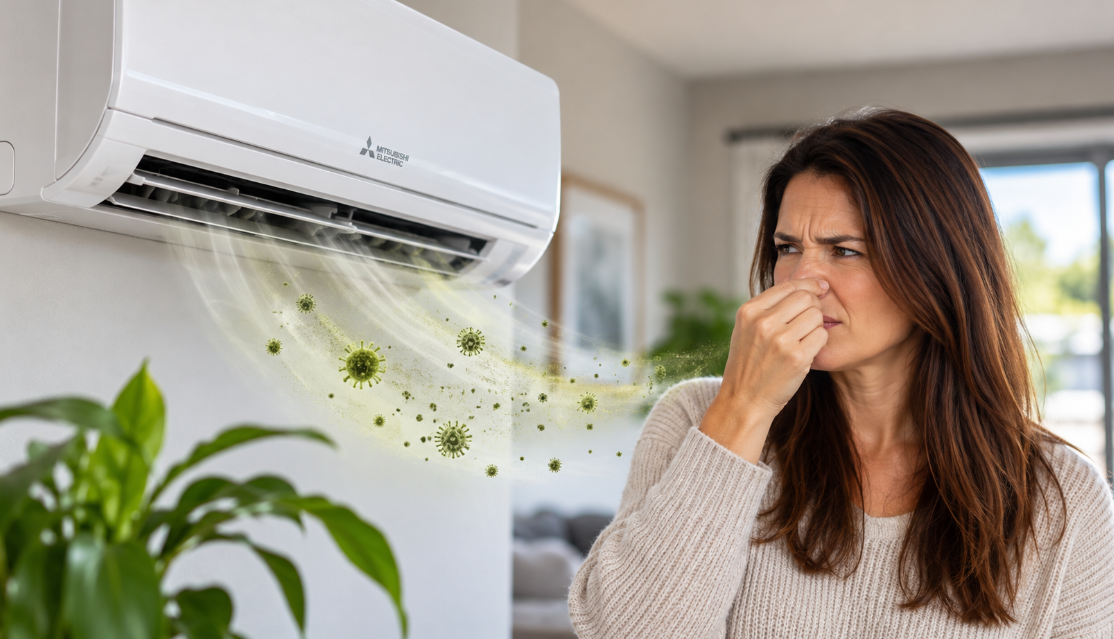
A heat pump should help keep your home comfortable — it shouldn't leave the room smelling musty, damp or unpleasant.
If you've noticed an unusual smell coming from your heat pump, you're certainly not alone. Odours can develop for several reasons, from something as straightforward as dirty filters through to moisture, mould or other build-up inside the unit.
Some smells can be resolved with basic heat pump maintenance, while others are a sign that it's time to have your system professionally inspected.
So, why does your heat pump smell, and what should you do about it?
Why Does My Heat Pump Smell Musty?
A musty or damp smell is one of the most common heat pump odours.
Your heat pump continually moves air through the indoor unit. Over time, dust, dirt and other airborne particles can accumulate on filters and internal components.
When the heat pump is operating in cooling mode, moisture can also form on the indoor coil as humidity is removed from the air. Normally, this moisture drains safely away.
However, the combination of moisture and accumulated dirt can create conditions where unpleasant musty odours develop.
Mould or fungal growth may also become an issue if parts of the system remain damp or aren't kept sufficiently clean.
If your heat pump smells like damp clothes, an old towel or a musty room, accumulated contamination inside the indoor unit is one of the first things worth investigating.
Can Mould Grow Inside a Heat Pump?
Potentially, yes.
Heat pumps don't inherently create mould, but the indoor unit can provide some of the conditions mould likes: moisture, warmth and accumulated organic material such as dust.
This is particularly relevant when a system is used extensively for cooling and dehumidification.
Filters aren't the only parts that can become dirty. Dust and contamination can accumulate deeper inside the unit on components such as the heat exchanger, fan and internal air passages.
That's one reason cleaning the filters doesn't always eliminate an established heat pump smell.
Can Dirty Heat Pump Filters Cause a Smell?
Yes.
Your heat pump's filters capture dust and other airborne particles before they travel further into the system.
As the filters become dirty, airflow can be restricted and accumulated material can contribute to unwanted odours.
Regularly cleaning your filters is therefore one of the simplest things you can do to keep your heat pump operating properly.
Check the instructions for your particular heat pump model before removing or cleaning filters. Most reusable filters can be carefully vacuumed or washed, but they should be completely dry before being returned to the heat pump.
If you've cleaned the filters and the smell remains, contamination may be located further inside the unit.
Why Does My Heat Pump Smell When I First Turn It On?
If a heat pump hasn't been used for some time, you might notice a smell when you switch it back on.
Dust and other particles may have accumulated while the system was sitting unused. Once airflow begins again, those smells can become noticeable.
A mild dusty smell that quickly disappears may not necessarily indicate a problem.
However, if the smell is strong, musty or continues every time you operate the heat pump, it's worth investigating rather than simply trying to mask the odour with air freshener.
Why Does My Heat Pump Smell Sour?
People describe heat pump smells in different ways. What one person describes as musty, another might describe as sour, stale or even similar to dirty socks.
These smells can often be associated with bacteria, mould, moisture or accumulated contamination within the indoor unit.
Cleaning the easily accessible filters is a sensible first step.
If that doesn't solve the problem, a professional heat pump service allows components deeper inside the system to be inspected and appropriately cleaned.
Why Does My Heat Pump Smell Like It's Burning?
A burning smell deserves more attention.
If the heat pump hasn't operated for a long period, you may occasionally notice a brief dusty smell when it starts up.
But a persistent electrical, plastic or burning smell shouldn't be ignored.
It could indicate an electrical issue, overheating component or another fault requiring professional attention.
If you notice a strong or persistent burning smell, switch the heat pump off and arrange for it to be inspected rather than continuing to operate it.
If there are signs of smoke or fire, treat it as an emergency.
Why Does My Heat Pump Smell Like Something Has Died?
Unfortunately, small insects, rodents or other pests can occasionally find their way into areas around heating and cooling equipment.
If you notice a particularly strong, unusual or decomposing smell, there may be something inside or around the system that needs to be removed.
Don't dismantle the heat pump yourself to investigate.
A technician can inspect the system safely and determine whether the source is within the indoor unit, outdoor unit, pipework or somewhere else nearby.
Can a Blocked Heat Pump Drain Cause Smells?
When your heat pump operates in cooling mode, condensation needs to drain away from the indoor unit.
If the drain becomes partially blocked or contaminated, moisture may not move through the system as effectively as intended.
Standing moisture and accumulated organic material can contribute to unpleasant smells and potentially other problems.
Drainage issues can sometimes also result in water leaking from the indoor unit.
If you notice both a smell and water around your heat pump, we'd recommend having the system checked.
Can Cooking, Pets or Cigarette Smoke Make a Heat Pump Smell?
Remember that your heat pump continually circulates the air that's already inside your home.
Cooking oils, pet-related odours, cigarette smoke and other airborne contaminants can therefore enter the system.
Over time, some of these contaminants may accumulate on filters or internal surfaces.
This can explain why a heat pump sometimes seems to amplify an existing household smell when it's switched on.
Keeping filters clean helps, but significant contamination may require a more thorough professional clean.
How Do I Get Rid of a Bad Smell From My Heat Pump?
If your heat pump has started smelling unpleasant, there are a few things you can check.
1. Clean the filters
Start with the easiest maintenance task.
Switch the heat pump off and follow the manufacturer's instructions for removing and cleaning its filters.
Removing accumulated dust can improve both airflow and air quality.
2. Check the area around the heat pump
Sometimes the heat pump isn't actually the source.
Check for damp materials, mould, pet accidents, rubbish or other potential sources of odour around the indoor and outdoor units.
3. Run the system and identify when the smell occurs
Does the smell appear immediately? Only during cooling? Does it disappear after a few minutes or become stronger?
This information can be useful when describing the problem to a heat pump technician.
4. Book a professional heat pump service
If cleaning the filters doesn't fix the smell, it's probably time to have the unit properly inspected.
A professional service can address areas of the system that aren't accessible during normal homeowner maintenance.
Will Cleaning My Heat Pump Get Rid of the Smell?
It depends on what's causing it.
If dirty filters are responsible, basic cleaning may make a significant difference.
If dirt, mould or other contamination has accumulated deeper inside the heat pump, cleaning only the filters may not be enough.
Components such as the heat exchanger, fan and internal ducting can accumulate dirt over time and may require professional attention.
The important thing is to address the source of the smell rather than simply covering it with fragrances or sprays.
Should I Spray Air Freshener Into My Heat Pump?
No.
We wouldn't recommend spraying air freshener, disinfectant, household cleaner or other chemicals directly into a heat pump.
A heat pump contains electrical components and specialised surfaces, and inappropriate cleaning products could potentially damage the system.
If there's contamination inside the unit that can't be reached through routine filter cleaning, arrange professional servicing instead.
How Can I Prevent My Heat Pump From Smelling?
Regular maintenance is the best starting point.
That includes:
- Cleaning filters regularly
- Keeping the area around the indoor and outdoor units clean
- Making sure airflow isn't obstructed
- Watching for water leaks or drainage problems
- Having the heat pump professionally serviced
- Addressing unusual smells before they become significantly worse
Modern Mitsubishi Electric heat pumps also incorporate technologies designed to help minimise dirt and odour build-up.
For example, selected Mitsubishi Electric models feature Dual Barrier Coating, which helps prevent dust and dirt accumulating on internal components. Some models also incorporate advanced filtration designed to capture airborne contaminants and reduce odours.
These technologies can help, but they don't eliminate the need for normal cleaning and maintenance.
How Often Should You Clean Your Heat Pump Filters?
There's no single schedule that's perfect for every household.
How quickly filters become dirty depends on factors including how frequently you use your heat pump, whether you have pets, your indoor environment and the particular model you own.
The best approach is to check the manufacturer's instructions for your heat pump and inspect the filters regularly.
A household using its heat pump every day may naturally need to clean the filters more frequently than one using the system occasionally.
When Does a Smelly Heat Pump Need Professional Servicing?
Consider arranging a professional inspection if:
- The smell remains after cleaning the filters
- Your heat pump smells persistently musty or damp
- You suspect mould inside the unit
- There's water leaking from the indoor unit
- The smell is electrical or burning
- Airflow has noticeably reduced
- The heat pump isn't heating or cooling as effectively as before
- The system hasn't been professionally serviced for some time
A smell can sometimes be an early indication that maintenance is overdue, so dealing with it sooner may prevent a more significant problem developing.
Heat Pump Cleaning and Servicing in Tauranga
If your heat pump smells musty, damp or simply doesn't seem as fresh as it used to, Bay of Plenty Heat Pumps can help.
We install and service Mitsubishi Electric heat pumps throughout Tauranga, Mount Maunganui, Papamoa and the wider Bay of Plenty.
Regular servicing can help keep your heat pump clean, maintain airflow and efficiency, identify potential problems and keep your system performing properly throughout the year.
If cleaning your filters hasn't solved the smell — or you'd simply like your heat pump professionally checked — talk to our team about booking a heat pump service.
Frequently Asked Questions
Why does my heat pump smell musty?
A musty heat pump smell is commonly associated with accumulated dust, dirt and moisture within the indoor unit. In some cases, mould or other microbial growth may also contribute to the smell.
Why does my heat pump smell when I turn it on?
Dust and other contaminants can accumulate while a heat pump isn't being used. A brief dusty smell may disappear quickly, but a persistent musty or unpleasant smell should be investigated.
Can a dirty heat pump make my house smell?
Yes. Because the heat pump circulates air throughout the room, odours originating inside the unit can become noticeable throughout the surrounding area.
Will cleaning the filters stop my heat pump smelling?
It may if dirty filters are responsible. If the smell remains after filter cleaning, dirt or contamination may have accumulated deeper inside the indoor unit.
Is a musty heat pump dangerous?
A musty smell doesn't automatically mean your heat pump is dangerous, but it can indicate accumulated dirt, moisture or possible mould. It's worth identifying and correcting the cause rather than ignoring it.
Why does my heat pump smell like burning?
A persistent burning, hot-plastic or electrical smell can indicate a fault and shouldn't be ignored. Switch the unit off and arrange professional assessment.
How do I stop my heat pump from smelling?
Regular filter cleaning and professional maintenance can help prevent dirt, moisture and other contaminants from accumulating inside the system.
Do heat pumps need professional cleaning?
Routine filter cleaning can be performed by homeowners, but parts deeper inside the heat pump require appropriate knowledge and equipment to inspect and clean safely. Professional servicing is worthwhile when there are persistent smells, reduced airflow, leaks or other performance issues.